

news
Leonel Fernández Highlights the Strengths of Latin America and the Caribbean in a Fragmented World
September 23, 2026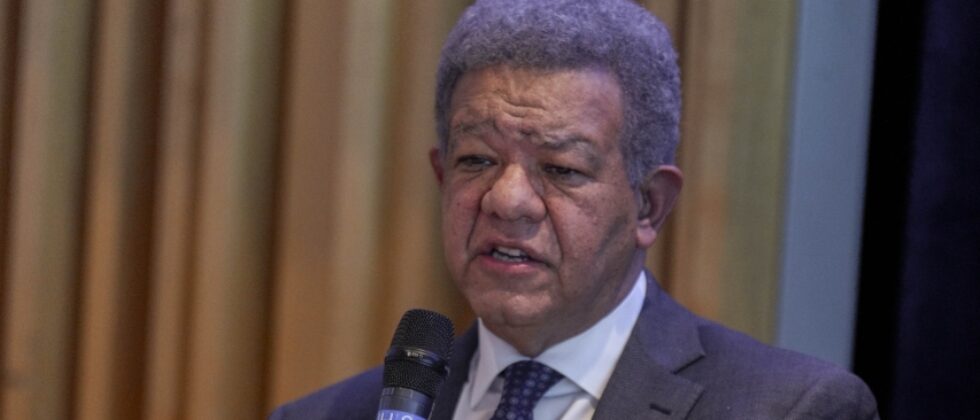
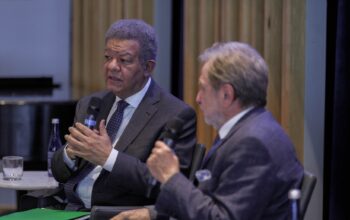
New York, Sept. 23 (EFE).- Former Dominican President Leonel Fernández opened the VIII Global Forum: Latin America and the Caribbean in New York on Wednesday, at a time of geopolitical fragmentation and political polarization in which the region enters “with extraordinary assets,” he said.
During the opening of the forum, held at Columbia University in Manhattan, Fernández, President of the Fundación Global Democracia y Desarrollo (FUNGLODE), stressed that the world is experiencing “a level of fragmentation and political polarization unprecedented since the end of the Cold War.”
“All the certainties of the postwar liberal order have given way to more open strategic competition among the major powers, while economic interdependence, once considered a guarantee of peace, now coexists with considerable institutional fragility,” he said.
Fernández, who served as President of the Dominican Republic from 1996 to 2000 and again from 2004 to 2012, cited as examples “the growing tensions between Israel and Hamas,” as well as the escalation of conflict in the Middle East and the recent war between the United States and Iran, which has led to the blockade of the strategically important Strait of Hormuz.
Fernández said that Latin America and the Caribbean enter this turbulent context with “extraordinary assets,” including “strategic natural resources, enormous renewable energy potential, and reserves of critical minerals that are essential to the global energy transition.”
Transforming those “advantages” into sustainable and inclusive growth requires strong institutions, the rule of law, greater productivity, effective regional integration, and public policies capable of looking beyond the immediate electoral cycle, he emphasized.
The Role of Latin America and the Caribbean in the Current Global Context
This year, the Forum places particular emphasis on Latin America’s role in a changing global economy.
“Latin America is going through a significant crisis. Following a period of economic weakness, the region has experienced relatively slow growth since the market reforms of the 1990s,” explained José Antonio Ocampo, former Colombian Minister of Agriculture and professor at Columbia University, during one of the panels.
Between 2014 and 2023, Latin America’s economic growth stood at 0.9%, a figure “worse” than during the debt crisis of the 1980s. For this reason, Ocampo refers to this period as “Latin America’s second lost decade.”
Despite this, Ocampo highlighted Latin America’s strengths. In addition to its “strong assets” and “natural resources,” as Fernández had noted, the region has one of the cleanest energy production mixes in the world.
He added that the trade war triggered by the tariff policy of U.S. President Donald Trump two years ago has had a “modest” effect on the region.
“Most trade between Mexico and the United States continues to take place under the free trade agreement, many countries face relatively low tariffs, and, above all, most Latin American countries maintain significant trade ties with China, which is the main destination for their exports, allowing them to obtain certain advantages,” he said.
Through other panels, the Forum is also examining the electoral landscape in Latin America, the role of Latino voters in the United States midterm elections, and the global impact of conflicts in the Middle East.
EFE
You might also like...

New York
780 Third Avenue 19th Floor
New York, N.Y. 10017
T: 212.751.5000
Activities
The Foundation conducts research, enhances public understanding, designs public policies, devises strategies, and offers capacity building in areas crucial to social, economic, democratic and cultural sustainable development.