

news
Leonel Fernández: “Latin America Cannot Afford to Fall Behind in the Technological Revolution”
September 23, 2026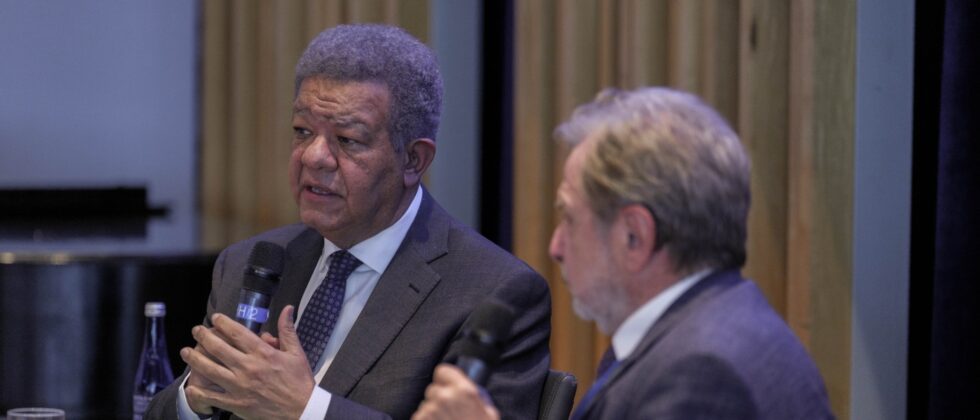
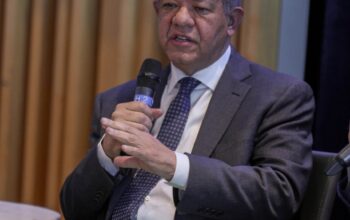
New York, Sept. 23 (EFE).- Former Dominican President Leonel Fernández, currently President of the Fundación Global Democracia y Desarrollo (FUNGLODE), stressed in an interview with EFE in New York that Latin America must not fall “behind” in the field of artificial intelligence (AI).
“We cannot afford to fall behind in this new technological revolution that is taking place. We already have generative AI in the region, and data centers are being developed. We also have a workforce that has become increasingly trained in high technology,” Fernández said. He is in New York for the VIII Global Forum: Latin America and the Caribbean, organized by FUNGLODE.
Fernández, who served three terms as President of the Dominican Republic, emphasized that if the region fails to recognize “the importance of science, technology, and innovation in improving productivity,” it will remain “permanently behind.”
In this regard, he highlighted the creation of the Santo Domingo Cyber Park, home to the Technological Institute of the Americas, which has trained more than 60,000 young people in software development, mobile applications, nanotechnology, biotechnology, mechatronics, and multimedia, and which now plans to expand further into semiconductors and artificial intelligence.
More specifically, the goal is to promote AI applied “across the board” to agriculture, industry, professional services, and commerce, “which will increase productivity and efficiency” in Latin American and Caribbean countries.
“Like everything else, AI has both advantages and risks, and we have to find ways to regulate its use in academia, healthcare, and across all sectors and services of Dominican society,” the former president said.
Political Stability Is Key to Foreign Investment
During the interview, Fernández stressed that the first requirement for attracting foreign investment and diversifying Latin American markets “is to have democratic political stability,” meaning a rule-of-law framework that provides guarantees.
“Latin America has become, in recent years, the region receiving the largest amount of foreign investment, even surpassing developed countries and other regions of the world,” he said.
He added that “although there have been periods of decline,” the region has advanced “in economic terms and in physical infrastructure over the past several decades.”
Regarding the region’s political climate, Fernández welcomed what he described as greater transparency in elections across Latin American countries and higher levels of participation.
“I believe we have secured electoral democracy in Latin America. No one carries out coups d’état anymore, and there is no longer the kind of political violence we experienced in the past. That period of militarization in Latin American politics has been overcome,” he said.
“There is electoral integrity, and where it is lacking, efforts are made to improve the system. The issue is no longer how power is attained, but how to govern democratically while generating economic, social, educational, and cultural benefits,” he added.
“There Is Political Polarization in Latin America and Around the World That Makes It Difficult to Reach Agreements”
Despite the improvements experienced by the region and the opportunities now available to it, Fernández acknowledged that there is currently “political polarization in Latin America and around the world that makes it difficult to reach regional integration agreements.”
Nevertheless, he expressed optimism and said that in the coming years “responsible leaders will return who place national and regional interests above ideological considerations,” making it possible to build “regional integration that is economic, social, cultural, political, and technological.”
He also defended multilateralism, which he said is currently being rejected by major powers such as the United States, and argued that a new system of global governance is needed to address international challenges. He cited the COVID pandemic, which “no country could confront on its own,” as well as the role of the International Monetary Fund (IMF) when a country faces a debt crisis.
“The rejection of multilateralism affects us greatly because there are global problems that do not have national solutions and must be addressed through international cooperation,” he said.
EFE
You might also like...

New York
780 Third Avenue 19th Floor
New York, N.Y. 10017
T: 212.751.5000
Activities
The Foundation conducts research, enhances public understanding, designs public policies, devises strategies, and offers capacity building in areas crucial to social, economic, democratic and cultural sustainable development.